
Are you planning a trip to Thailand and not sure what to bring? When I visited Thailand for the first time, my suitcase was full of things I never used. After several trips, I now know exactly what is essential and what isn’t. This guide will save you time, money, and stress. Below, you’ll find a complete Thailand packing list, my personal tips, what to wear, what to buy locally, and the things you should definitely leave at home.
If you’re traveling to Southeast Asia for the first time, you’re probably expecting hot weather but what will you actually need? As someone currently living in Bangkok, I’ve put together this practical guide to help you prepare for your trip to Thailand.
❤️ This article contains affiliate links. If you make a purchase through them, I may earn a small commission at no extra cost to you. Thank you for your support.
If you’re in a hurry, here’s the short version of Thailand packing list
| Category | Items |
|---|---|
| Clothing | Light, breathable clothes, 2–3 swimsuits, sandals, temple-appropriate outfit |
| Health & Safety | Sunscreen, basic medicines, travel insurance |
| Electronics | Power bank |
| Money | Cash and credit card, esim |
| Tropical-Climate Extras | Hat, cooling wipes |
Packing List & Travel Essentials Thailand 2026
1. Documents & Must-Have Paperwork
Passport
Thailand generally requires visitors to have at least six months of passport validity from the date of arrival. Some nationalities may be allowed in with less, but airlines often won’t let you board unless you meet the six-month rule.
DTAC – Digital Arrival Card
This has been a new requirement since 2025. Within three days before entering Thailand, you must complete the Digital Arrival Card. You can do it online, it’s quick and free. You’ll just need your flight details, accommodation address, and a few other standard pieces of information. Once you submit the form, you’ll receive a confirmation email that you must show at immigration.
Make sure you really have it with you. I’ve seen immigration officers send tourists to the back of the queue multiple times simply because they didn’t have it completed.
Visa
Depending on where you’re from, you may or may not need a visa to enter Thailand as a tourist. Citizens of around 93 countries can enter Thailand without a visa and stay for up to 60 days. This stay can then be extended for an additional 30 days.
If you require a visa or plan to stay longer, check the information provided by your local Thai Embassy.
Backup copies
Save digital copies of your passport and visa on your phone. It will come in handy. I was recently at a show where they asked us to show ID. I don’t carry my passport with me all the time, so I just showed a photo of it on my phone and it was completely fine.
Travel Insurance
If you need to visit a doctor in Thailand, you’ll likely want someone who speaks English, so the best option is to go to a private hospital. The most well-known private hospital network in Thailand is Bangkok Hospital. They offer excellent service, but they are also very expensive, for a dengue fever blood they charged over €400.
My go-to travel insurance is SafetyWing, which is perfect for both short-term and long-term travelers. You can pay monthly or for a specific travel period. If you have any questions or need assistance, they also offer a very responsive online chat, I always get my answers quickly.
International Driving Permit
If you plan to rent a scooter or a car, you’ll need your driver’s licence and, in most cases, an international driving permit. Some rental shops may not explicitly ask for it, but it can become a serious issue if you have an accident and need to file an insurance claim.
2. What to Wear in Thailand
Thailand is a tropical country with year-round temperatures averaging around 30°C. For me, comfortable, airy pieces, preferably cotton and linen, are absolutely essential.
I only wear long pants when visiting temples, trekking in the jungle, or occasionally in the evening. You don’t need to pack your entire wardrobe, just bring enough clothes for a few days.
When you run out of clean clothes, simply drop everything off at a local laundry. You’ll get your items back the next day, washed, scented, and neatly folded.
Here are the best types of clothing for Thailand based on my own experience:
Light and breathable clothing
Get ready to sweat in Thailand. After just ten minutes outside, sweat is running down my back, so I avoid synthetic materials and tight cuts that feel uncomfortable. Pack a linen shirt, shorts, and airy cotton dresses.
Clothing for air-conditioned places
Indoor spaces like shopping malls, the metro, the Skytrain, and some buses are heavily air-conditioned, so keep something with long sleeves handy.
Clothing for temples
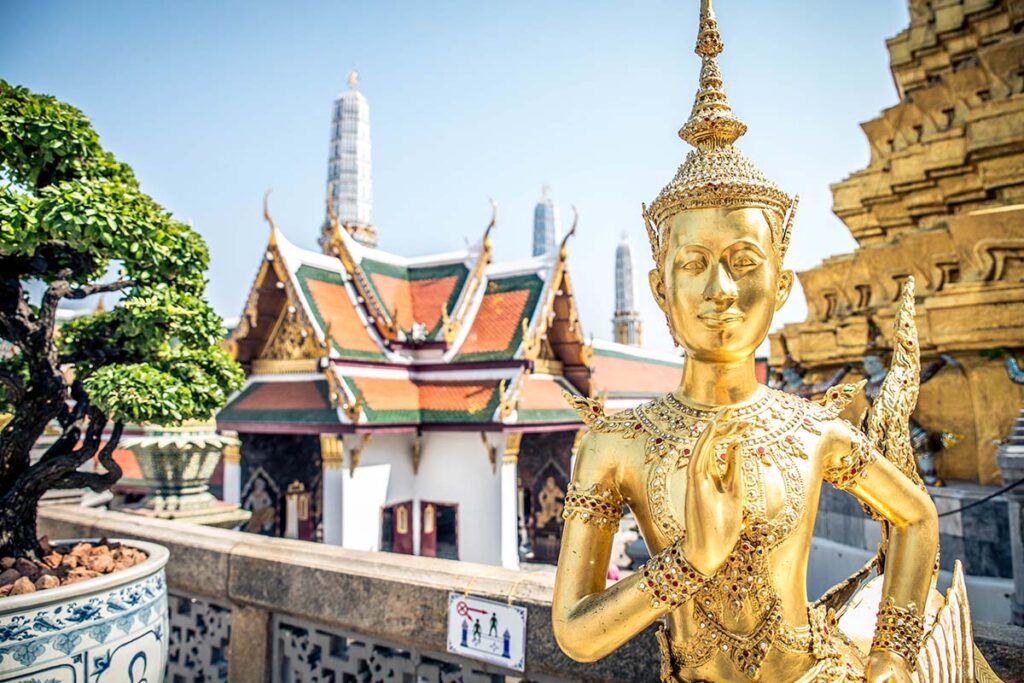
You can only enter temples with your shoulders and knees covered. I usually carry a long skirt to wear over my shorts and a scarf to cover my shoulders.
Swimwear
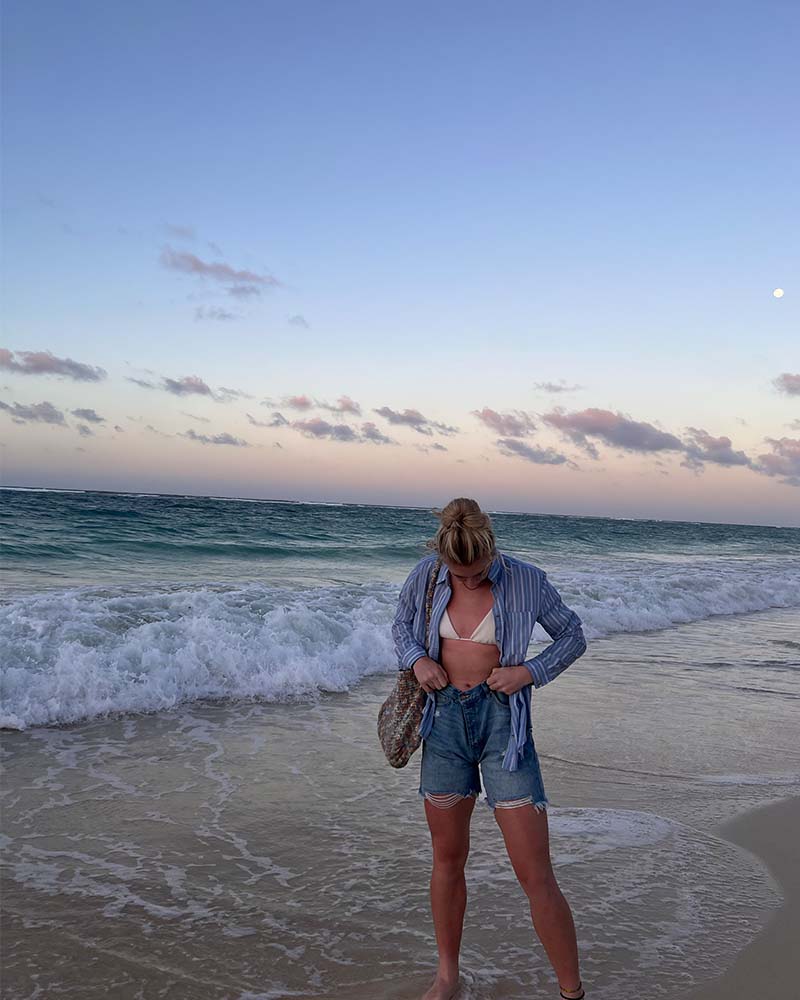
I recommend bringing at least two swimsuits. When I was recently on Koh Samet, mine didn’t dry overnight and I regretted only bringing one. Thais are quite conservative, and walking around the streets or in shops wearing swimwear is considered very disrespectful.
Comfortable shoes
If you’re heading to an island, flip-flops are usually enough. For trips or walks in the surrounding areas, pack comfortable sneakers.
Umbrella or raincoat
Are you traveling to Thailand during the rainy season (May–October)? Then a raincoat or umbrella will come in handy. You can buy both at the checkout counters of any 7-Eleven.
What to wear in Bangkok
Planning a stay in Bangkok and already know you won’t resist a cocktail with a city view? Be aware that most sky bars have a dress code. Forget flip-flops, tank tops (for men), and beach shorts. Thais, especially those in the capital, have a refined sense of style, I’d call it a minimalist elegance, so tourists in their outdoor clothing often look a bit out of place next to them.
3. Thailand Weather by Season
| Season | Months | Temp | Notes |
|---|---|---|---|
| Hot | Mar–Jun | Up to 40°C | Very hot in Bangkok. |
| Rainy | Jul–Nov | Varies by region | Gulf islands get rain later; north dries earlier. |
| Cool | Nov–Feb | 24–30°C | Best season; cooler at night in the north. |
4. Hygiene & Cosmetics
Sunscreen (SPF 30–50)
The sun in Thailand is very strong, even when it’s cloudy, so make sure to get a sunscreen with a high SPF. You can buy it in Thailand too, but it tends to be quite overpriced, especially on the islands.
Mosquito repellent
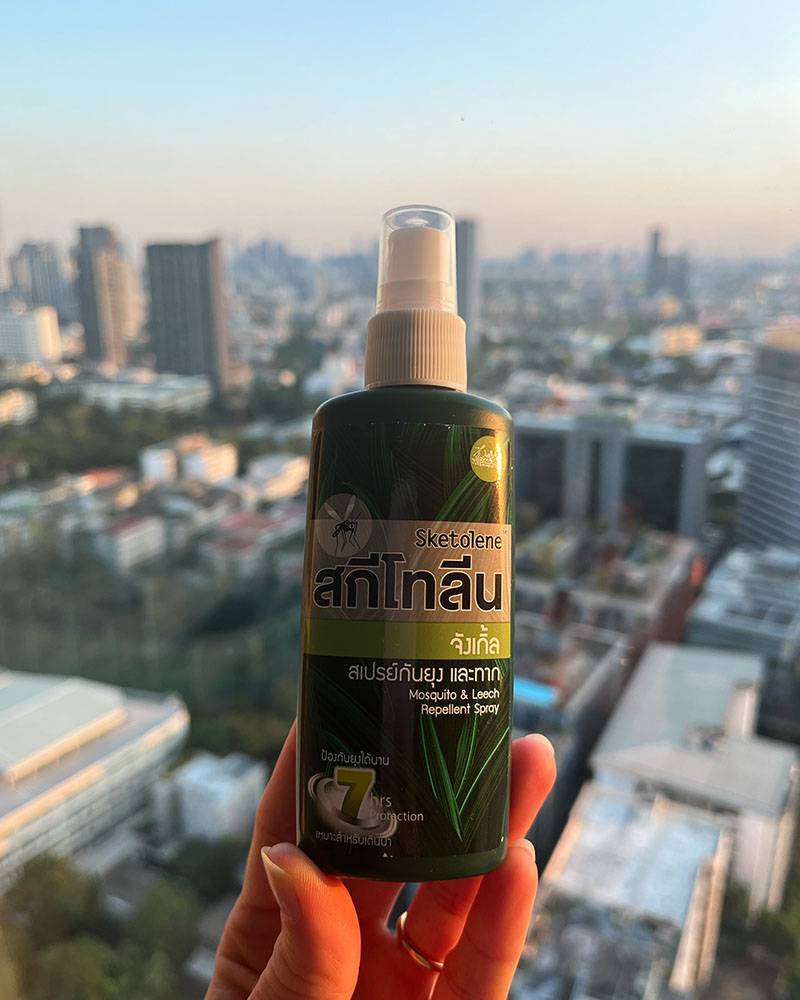
I always buy repellent once I’m already in Thailand. I’ve read that local brands work better on local mosquitoes. The best ones contain a high percentage of DEET, the higher the number, the longer the protection. You can buy them in any 7-Eleven or pharmacy.
Aloe Vera gel
Aloe vera gel is useful for sunburns. Feel free to buy it once you arrive, they have it in almost every supermarket and pharmacy. I recently picked up a small travel-size bottle with a lid, which is very handy for trips.
Mini toiletries
If you don’t want to carry full-size shampoo and other products, buy travel-size cosmetics in Thailand. 7-Eleven has a surprisingly big selection, including hair masks, face creams, sheet masks, and mini versions of pretty much anything you can think of.
Basic medicines
Don’t forget Panadol, anti-diarrhea medicine, and band-aids. You can buy all of these in Thailand as well, but you never know how far the nearest pharmacy will be. If you get seasick, pack some motion-sickness tablets.
Pack:
- Panadol / Ibuprofen
- Anti-diarrhea meds
- Plasters
- Antihistamine cream for bites
Hand sanitizer and wet wipes
These always come in handy when visiting local markets and street-food stalls.
5. Small First-Aid Kit
A mini kit should include the basics. You can buy all of these items in Thai pharmacies, including on smaller islands like Koh Samet. However, if you’re planning to go somewhere remote, such as national parks or the jungle, I recommend having these with you.
- Smecta / Imodium
- Activated charcoal
- Disinfectant
- Band-aids
- Painkillers
- Anti-itch cream
6. Electronics & Connectivity
Power bank
If your phone only lasts half a day on a single charge, pack a power bank, it will be especially useful during full-day trips.
Adapter
Most modern Thai outlets accept both flat (US-style) and round (EU-style) pins.
- Voltage: 220V
- Frequency: 50 Hz
Travel-sized power strip
Useful if you want to charge multiple devices at once.
eSIM card for connectivity
You will definitely need to stay connected during your trip to Thailand. Yes, you can buy a SIM card at the airport, but do you really want to swap SIMs or carry two phones? My go-to solution is to use an eSIM. My favorite is Airalo, which you can install on your phone before you leave. Once you land, just activate it.
You’ll need internet as soon as you arrive, especially to order Grab, and airport Wi-Fi is often very unreliable.
Get the best eSIM for Thailand ↓
7. Money & Payments in Thailand
Cash is still king
Thailand follows the motto “cash is king,” so be prepared to use cash often. You’ll need it in most cafés, budget restaurants, markets, and street-food stalls. Even 7-Eleven has a limit for card payments. I recommend withdrawing money from an ATM after you arrive. For travel, I recommend using a Revolut or Wise.
ATMs
ATMs are widely available across Thailand, but don’t expect many, or any on small islands or in remote areas. I always withdraw cash from ATMs using Revolut; the only fee I pay is the 250 THB charged by the Thai bank. Make sure you use the official Thai ATMs, which are easy to recognize, they’re usually yellow, green, purple, or blue.
Payment cards
In shopping malls, larger supermarkets, and more expensive restaurants (mainly in big cities and tourist areas), vendors generally accept Visa and Mastercard.
Money safety
Thailand is a very safe country, but in busy tourist markets, pickpocketing can occasionally happen. Keep your wallet and phone stored securely, ideally not in your back pocket.
8. Useful Small Items
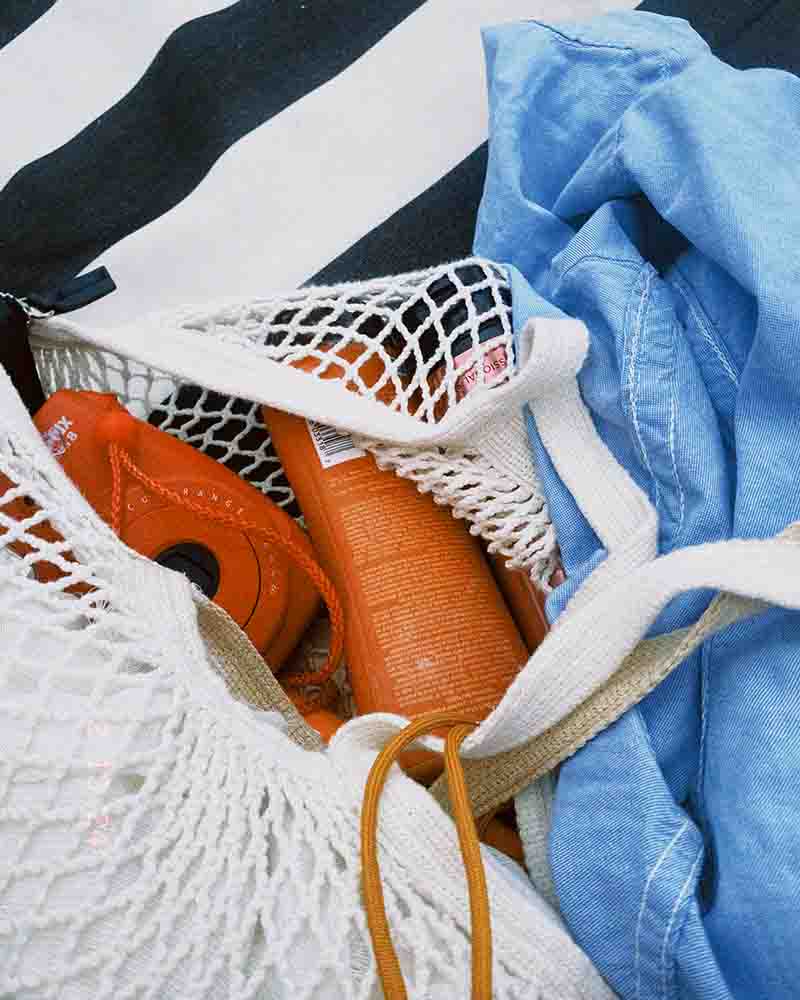
- travel towel
- waterproof phone pouch / waterproof bag – I used a waterproof phone pouch during kayaking in Koh Samet
- scarf / pareo
- small day backpack
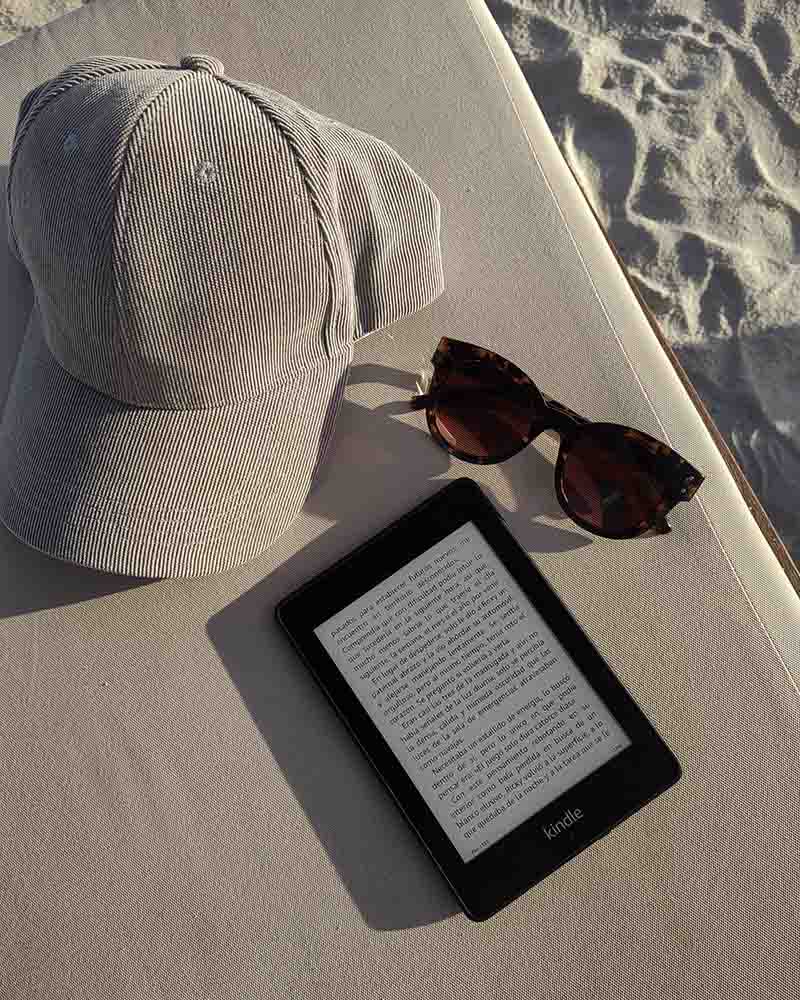
- hat or cap
- portable mini fan (very popular in Thailand!) – you can get it at 7-Eleven or MUJI
✹ What to Pack in Your Carry-On
- passport & documents
- phone + charger
- basic medicines
- wallet + card
- travel insurance confirmation
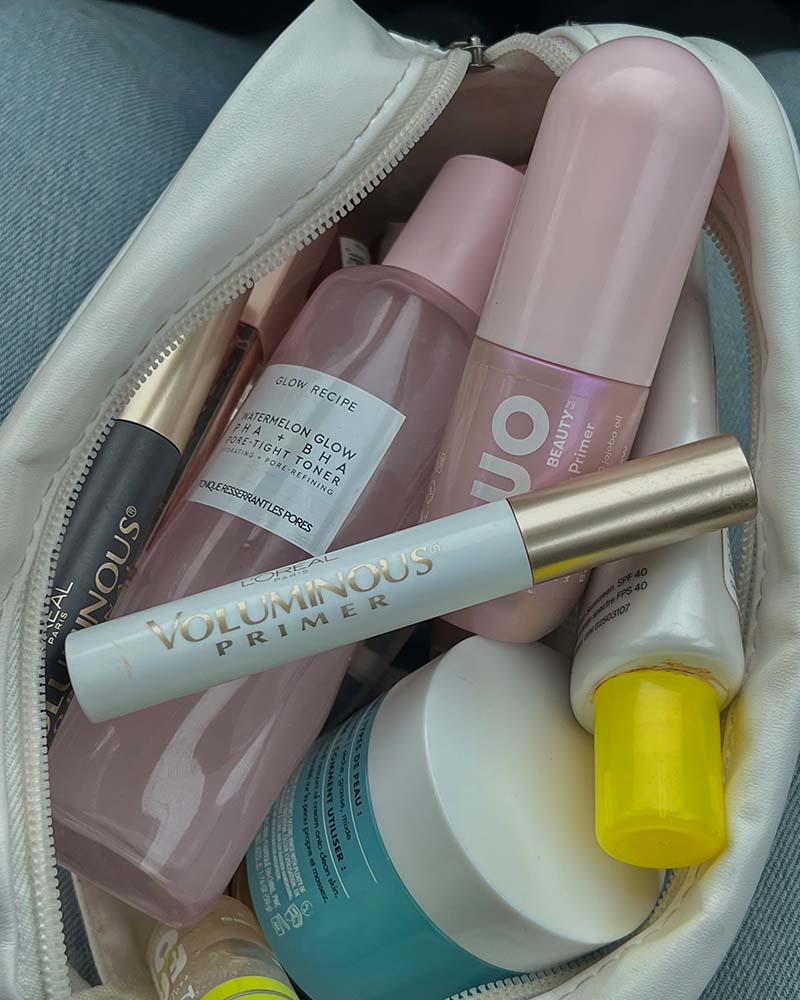
- light cosmetics
- book / headphones
- light sweater
- spare outfit (in case your suitcase gets lost)
✹ What NOT to Bring to Thailand
Warm clothing
Are you flying to Thailand in winter and planning to visit 2–3 destinations? Leave your winter coat at home. It takes up a lot of space, and trust me, you won’t feel like carrying it around.
Heavy shoes
The same goes for winter footwear. Swap snow boots and ankle boots for comfortable, lightweight sneakers.
Large towels
Every accommodation provides towels, and most hotels also offer beach towels. At most, bring a scarf that you can use in several ways.
Large bottles of cosmetics
They’re heavy and take up lots of space. It’s better to buy travel-size products, and many hotels also provide basic toiletries such as shower gel, shampoo, and conditioner.
Hairdryer
Another item that’s too bulky. Even lower-category hotels in Thailand provide hairdryers.
Other items
- thick jeans
- expensive jewelry
- unnecessary electronics
Everything else you can buy there.
Thailand Monsoon Packing List: May–October
Planning a trip to Thailand during the monsoon season? No worries! It’s not as bad as it sounds. It definitely doesn’t rain all day, showers are usually in the evenings or at night, and you may even get some sunshine during the day.
Below are a few things that might come in handy, especially if you’re planning a more active holiday.
- raincoat
- quick-drying shoes
- waterproof pouch
- light long-sleeve shirt (mosquito protection)
- smaller backpack rain cover
Avoid:
- heavy sneakers
- umbrellas (break easily in tropical storms)
Islands vs. North Thailand: What Changes
Thailand truly has something for everyone. It’s not just about beaches, in the north you can go trekking, ride the Mae Hong Son Loop, explore national parks, and enjoy countless outdoor adventures. Depending on where you’re heading, you may need to adjust what you pack. Here are a few of my tips:
Islands – Phuket, Krabi, Koh Samui etc.
- flip-flops
- swimsuit cover-up
- dry bag
- reef-safe sunscreen
North Thailand – Chiang Mai, Pai, Chiang Rai
- light jacket for evenings
- sneakers for trekking
- longer pants for jungle trips

Packing for Digital Nomads
Thailand is a digital nomad paradise. You really only need the basics, like your laptop and a few accessories, because you can get anything you need in Bangkok. I’ve worked remotely from Thailand before, and these are my must-haves:
- laptop with a case for protection
- compact keyboard and mouse — ideally with a mouse pad as well, since some cafés have glass tables and a mouse won’t work on them.
- travel adapter → (not needed, but optional power strip is useful)
- VPN → check out the offer for NordVPN
Packing for Families with Kids
Useful items:
- rashguard swimwear
- travel fan for stroller
- children’s sunscreen
- mosquito stickers
- electrolyte powder
- foldable beach blanket
FAQ: Thailand Travel Packing List
Do I need a visa for Thailand in 2025?
Citizens of many countries can stay in Thailand for up to 60 days as tourists without needing a visa. I recommend checking the latest information with your local Thai Embassy.
Can I drink tap water in Thailand?
No. Use bottled or filtered water. Tap water is fine for cooking or brushing your teeth, but if you want to make tea or coffee during your stay, I recommend using bottled water, mainly for the taste.
Is Thailand safe for solo travelers?
Yes, absolutely. Thailand is one of the safest places I’ve ever been, just be cautious with your belongings in busy tourist areas.
What is the Thailand temple dress code?
You need to cover your shoulders and knees. A long skirt or trousers paired with a short-sleeved T-shirt works well. I usually put a scarf around my shoulders. You’ll also need to take off your shoes before entering a temple, so if you’re sensitive to bacteria or germs, bring socks, you probably won’t want to walk around barefoot like everyone else.
Is Thailand expensive?
The cost of living in Thailand really depends on your lifestyle. It can be as expensive as central London, but it can also be very cheap. Ask yourself these questions: Can I live on street food? Am I happy with a basic room? If the answer is yes, then Thailand will be inexpensive for you. But if you prefer Western food and five-star hotels, expect to pay much more.
Also note that the most expensive places in Thailand are Phuket, Koh Samui, and the Thong Lo area in Bangkok.
Can you wear tank tops in Thailand?
Of course, tank tops are perfect when you’re on an island, exploring, or relaxing near the beach. However, they are a no-go when visiting temples and not ideal for an evening out in Bangkok (unless you’re on Khao San Road). You’ll almost never see Thai men wearing tank tops in the city.
Should I bring jeans to Thailand?
You don’t need jeans for your holiday in Thailand unless you plan to spend all day in an air-conditioned building working or studying. In that case, yes, bring your jeans, because with AC it can get pretty cold.
How many outfits do I need for Thailand?
Not many, it’s very easy to have your clothes washed, as there are laundry shops everywhere, even on small islands. From my experience, I’d say bring a few outfits for the beach, something appropriate for temples, something for a day in Bangkok (Thai people actually dress well, and you might not want to look like you just came from the beach), and an outfit for an evening in Bangkok.
Packing for Thailand doesn’t have to be complicated. Stick to lightweight clothing, 2–3 swimsuits, sunscreen, mosquito repellent, your documents, a power bank, basic medicines, and a few smart travel tools.
And remember — unless you’re going deep into the jungle, you can buy almost everything locally.

